


Working at Vertigo Games as a junior level designer I trained my level building skills in a big variety of spaces, from narrow traversals to vast exploration areas.
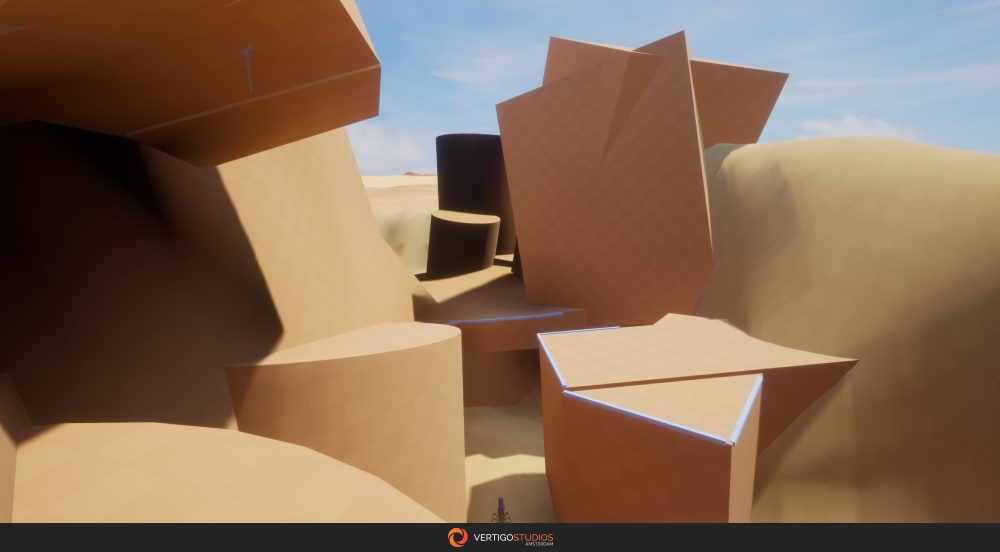
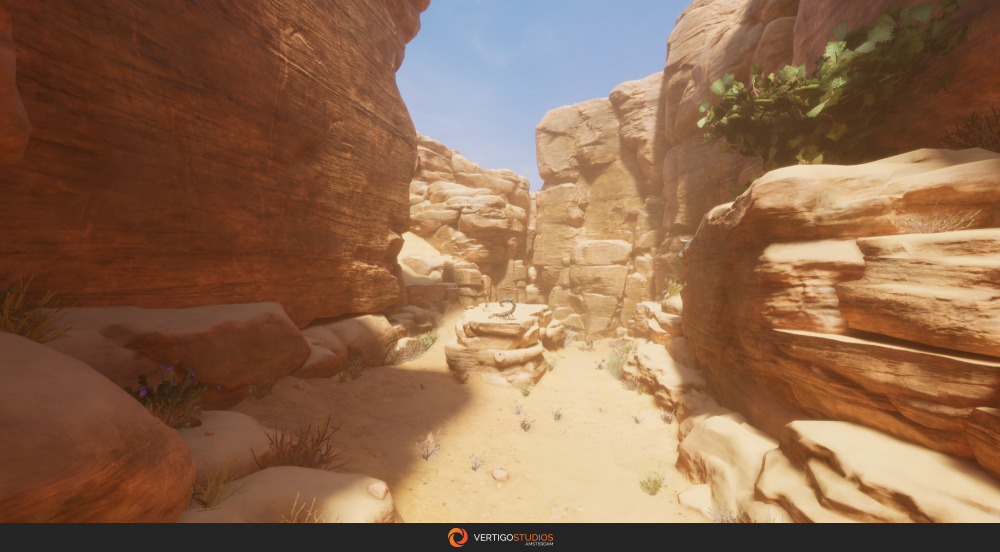
I was responsible for a significant portion of one of the starting chapters of the game. Working in close collaboration with several environmental artists, I transformed each area from paper prototypes to detailed blockouts.
Unlike other flat-screen games I worked on, developing a AAA title in VR had specific challenges. The levels had to be both high-quality and performant, so I came up with creative solutions to maintain a balance.
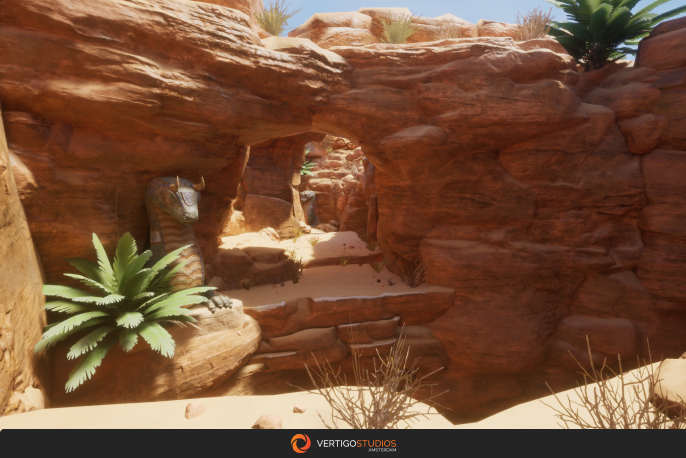
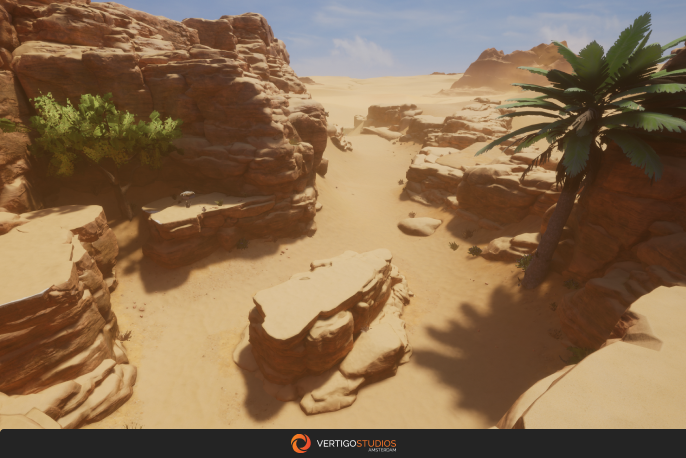
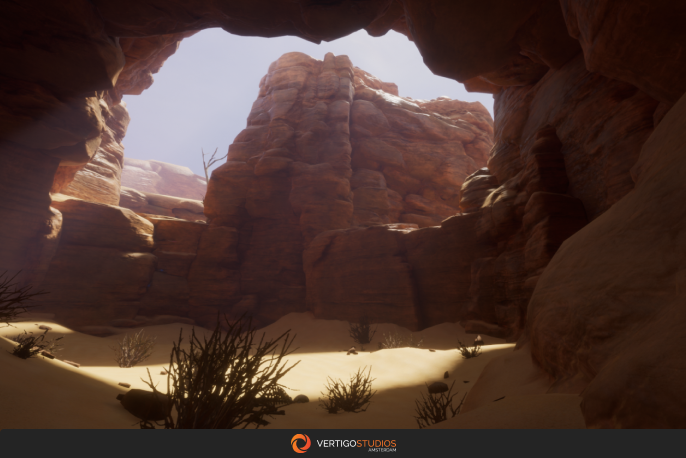
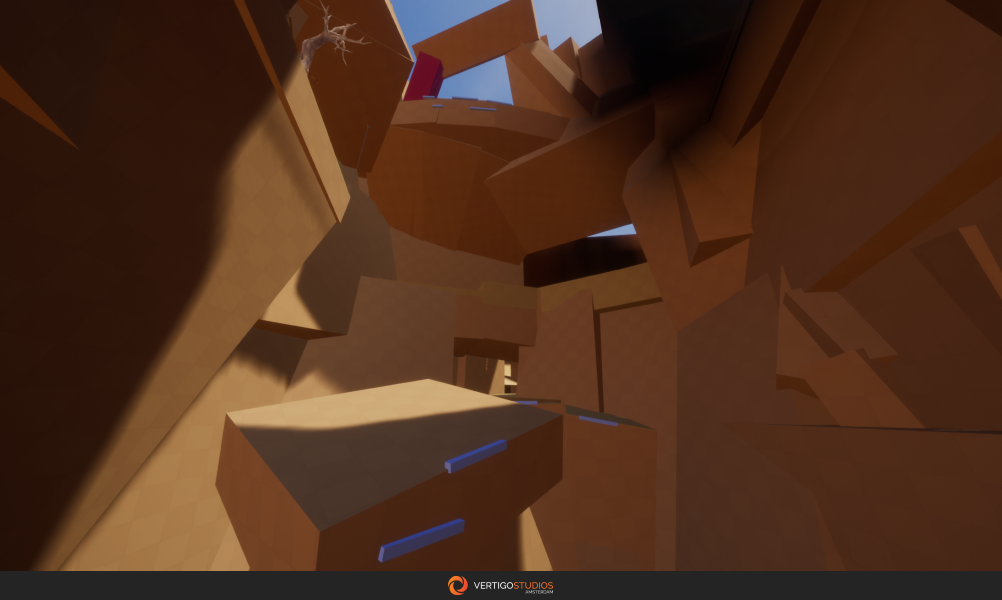
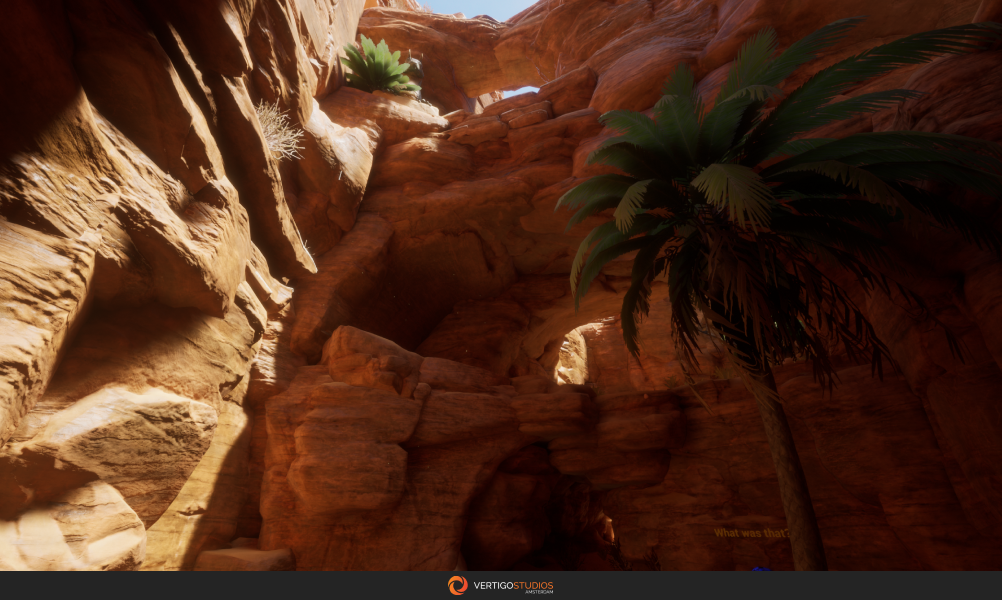
The first area I worked on aimed to introduce the player to a new mechanic and enemy type. I designed a vertical canyon that extended across three height-levels.
To establish a sense of scale and direction, I framed the entrance of the canyon to guide the player's line of sight towards their final objective, marking it with a distinct rock formation.
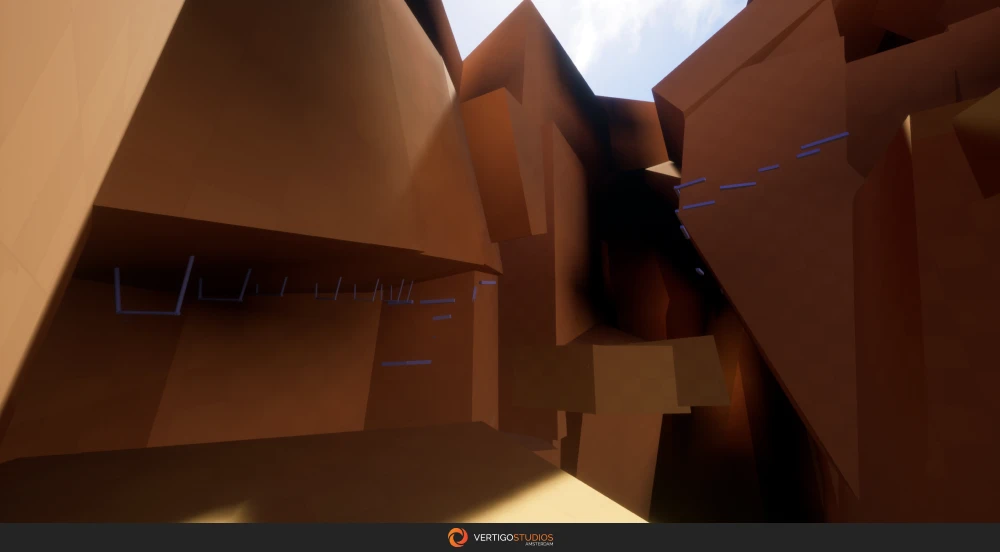
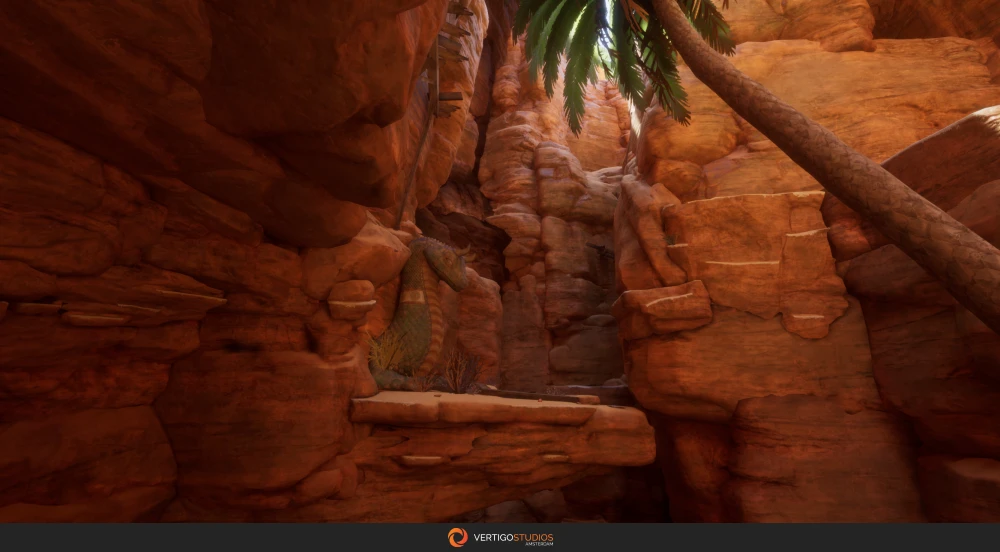
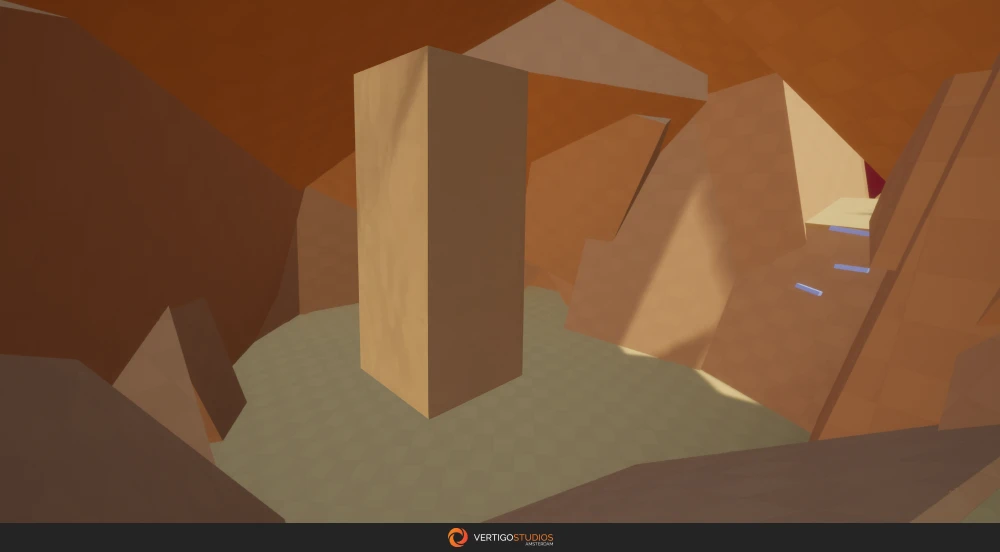
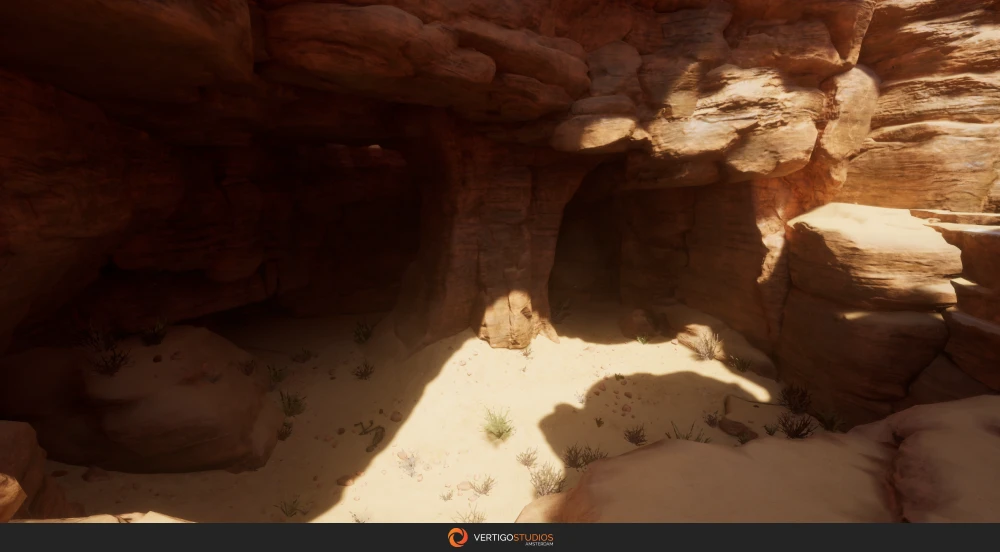


For the initial section, I designed a simple gated space which blocks the player's progression until they use the tutorialized mechanic to climb out of it.
Following up, I implemented a short foreshadowing moment, in which the player can see for the first time the enemy. I designed this introduction by keeping the player at a vantage point to ensure that they can spot the AI's behavior before engaging.
To keep a varied, interesting pace, I balanced locomotion challenges by designing a safe golden path, while still allowing players to take more dangerous shortcuts. This way players get the agency of choosing their own way of navigating the space.
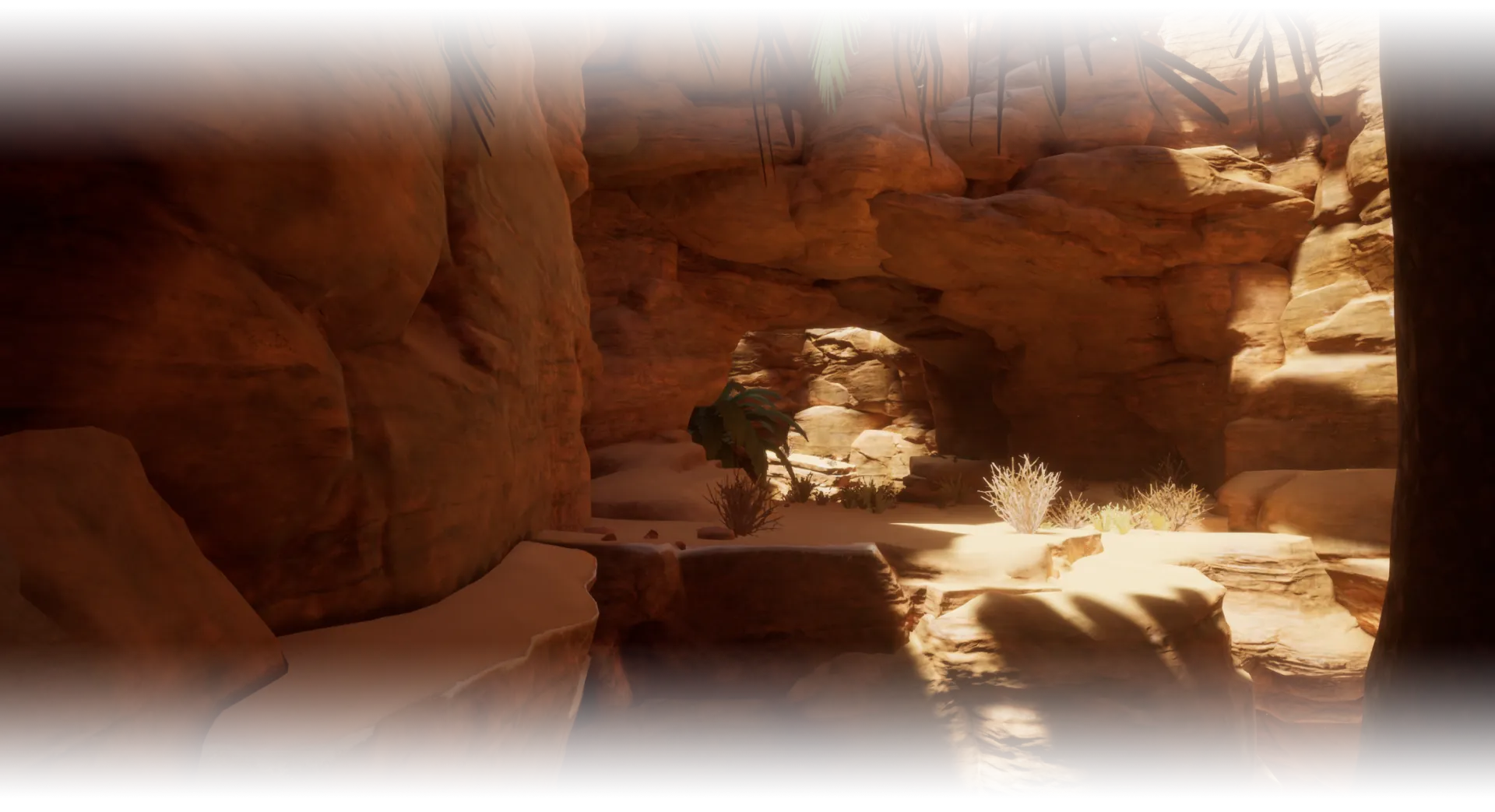
To reach the top, the player has to take a series of circulating paths that spiral around the center of the canyon. This way, I used the central point as a persistent visual anchor.
By looking down, players can orient themselves by looking, gaining a sense of progression. To avoid disorientation in a similar-looking environment, I used unique rock formations or folliage as landmarks.
I opted for this layout to make use of VR’s strengths in verticality, while reusing the same space by creating re-traverse moments from different canyon levels.
Each section I designed relied on a consistent visual vocabulary. Flat, open terrain signaled combat arenas, while complex, layered geometry combined with climbing holds led the player through traversal-heavy spaces.
By creating this design I encouraged players to firstly observe their environment and then act accordingly, adding a strategic element to vary the pacing.
One challenging task was adding a secret route that attracts the player, while remaining hidden. To make use of VR-specific interactions such as head-tracking, I placed the route's hand-holds behind the main climbing wall.
Testing showed that most of participants missed it. Bringing the holds closer to the golden path was not an option since it would contradict the intended route.
As a final solution, I used lightning to hide a platform in a darker area. This way, observant players could spot the secret path and make a conscious choice to take it, without distracting from the main one.
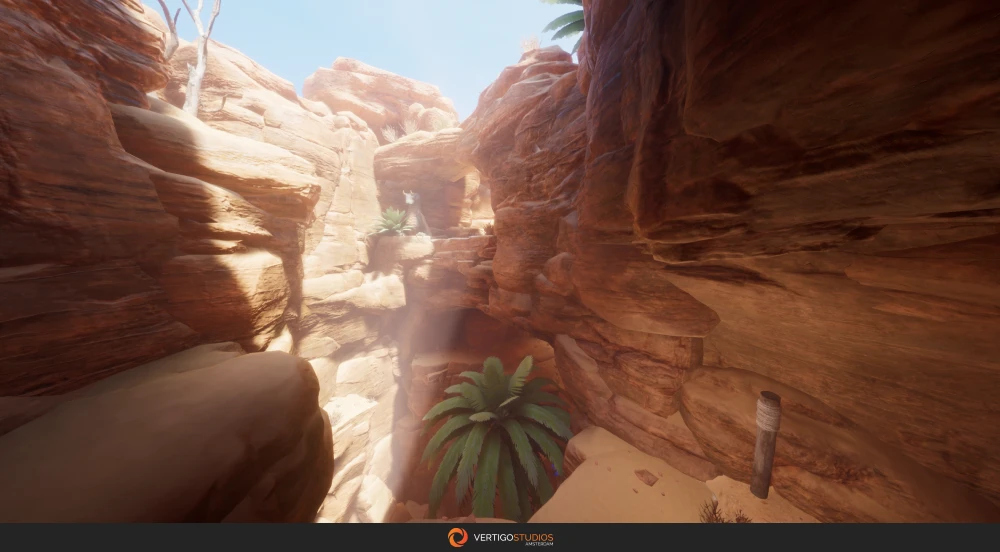
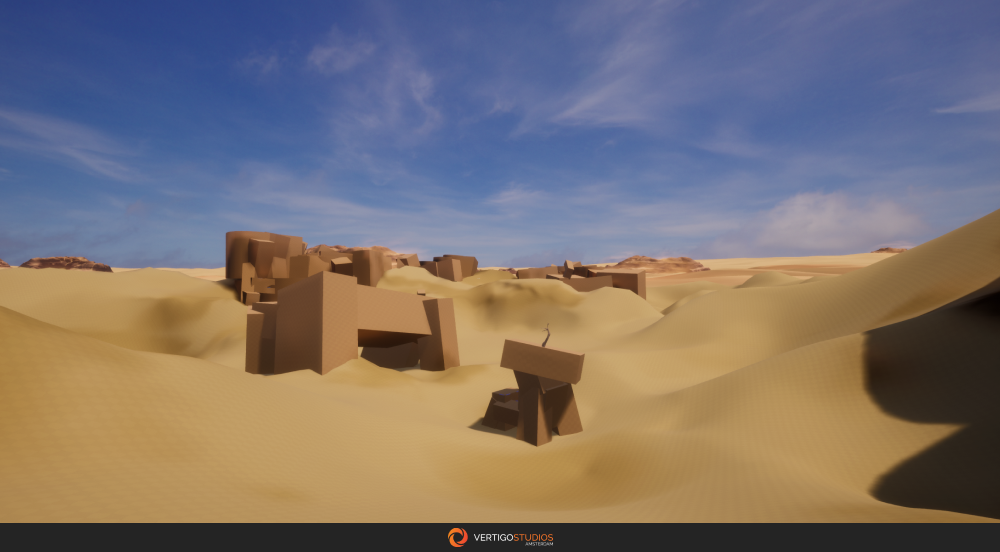
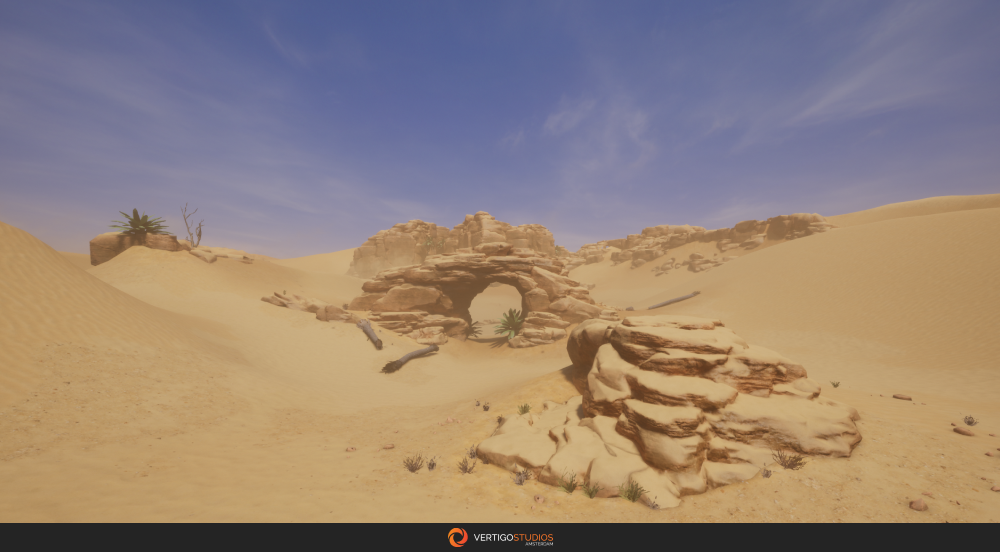
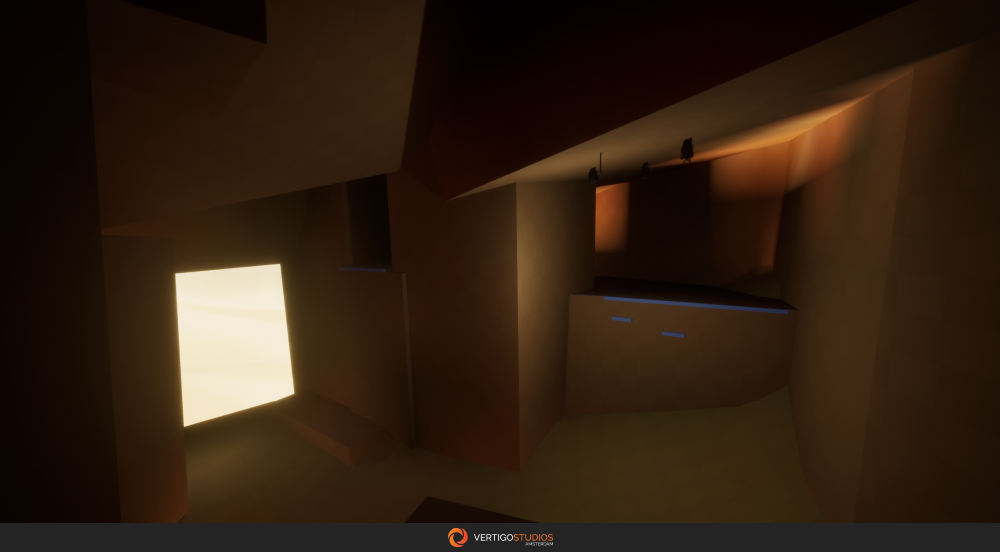
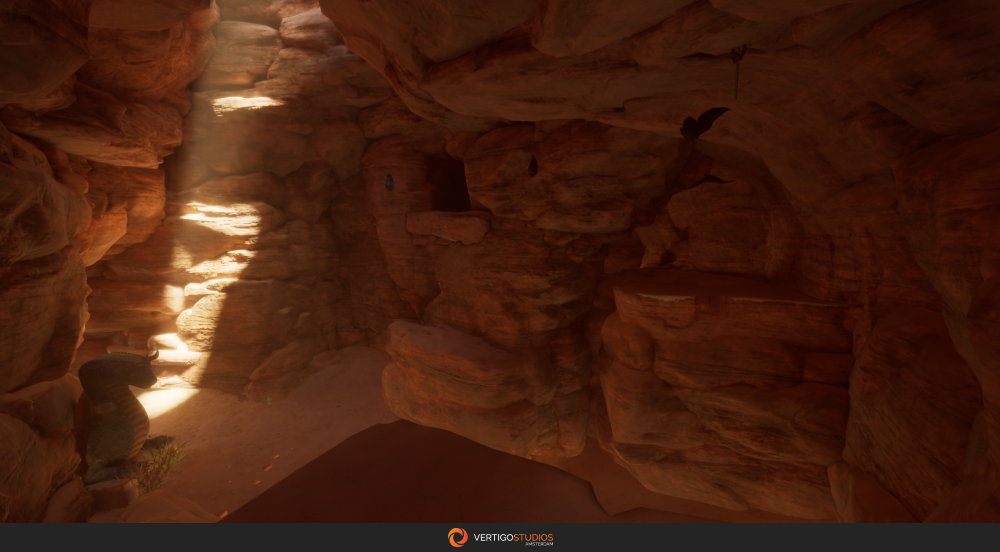
Designing a vast space while staying within the strict draw call and performance budgets of VR was demanding.
I was handed a low-fidelity blockout, focusing my design efforts on rewarding exploration without breaking the narrative progression.
Testing showed that landmarks were not enough to provide guidance. Together with the environmental artist, we split the desert into two areas, intersecting into choke points for all branching paths. This way, I funneled the player towards the right direction, while also keeping a high-performance.
To get rid of dead zones, I added short enemy encounters and hidden points of interest. This changed empty walking segments into engaging moments, making the player constantly interact with the world between objectives.
Setting up an enemy encounter in an open-space was difficult, since players could approach it from any angle. To design the same fair, realistic experience, I implemented trigger boxes that cover each entry point and conditional logic based on the player's location.
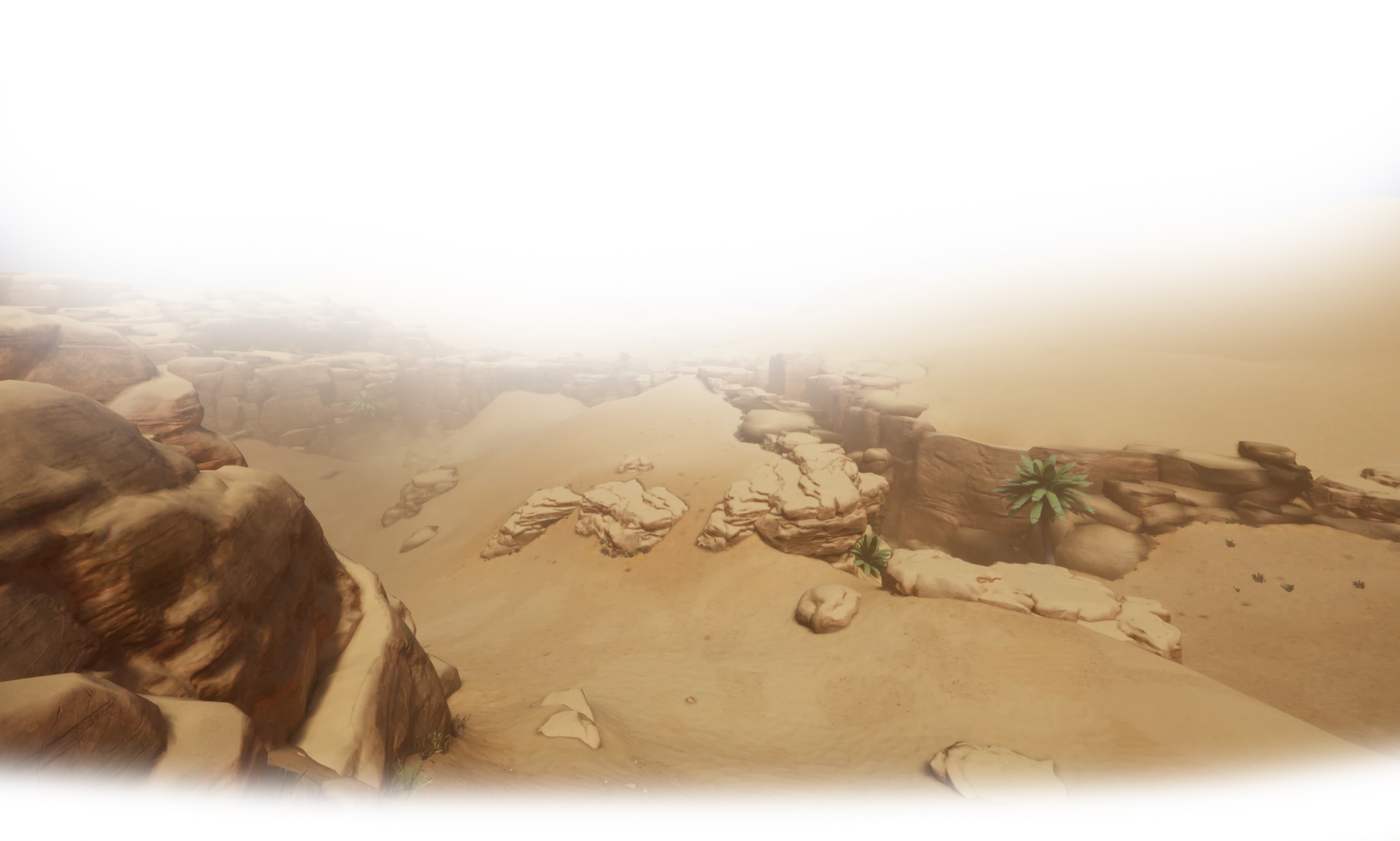
Working for the first time on a AAA VR title, I designed multiple levels, starting from simple sketches and working together with environmental artists to turn them into polished versions.
Since levels are where mechanics and assets come together, I constantly iterated the spaces to align with all disciplines' requirements. In this process, I learned how to better advocate for my decisions while staying flexible.